Portuguese Rug Craftsmanship: Techniques, Quality and Detail
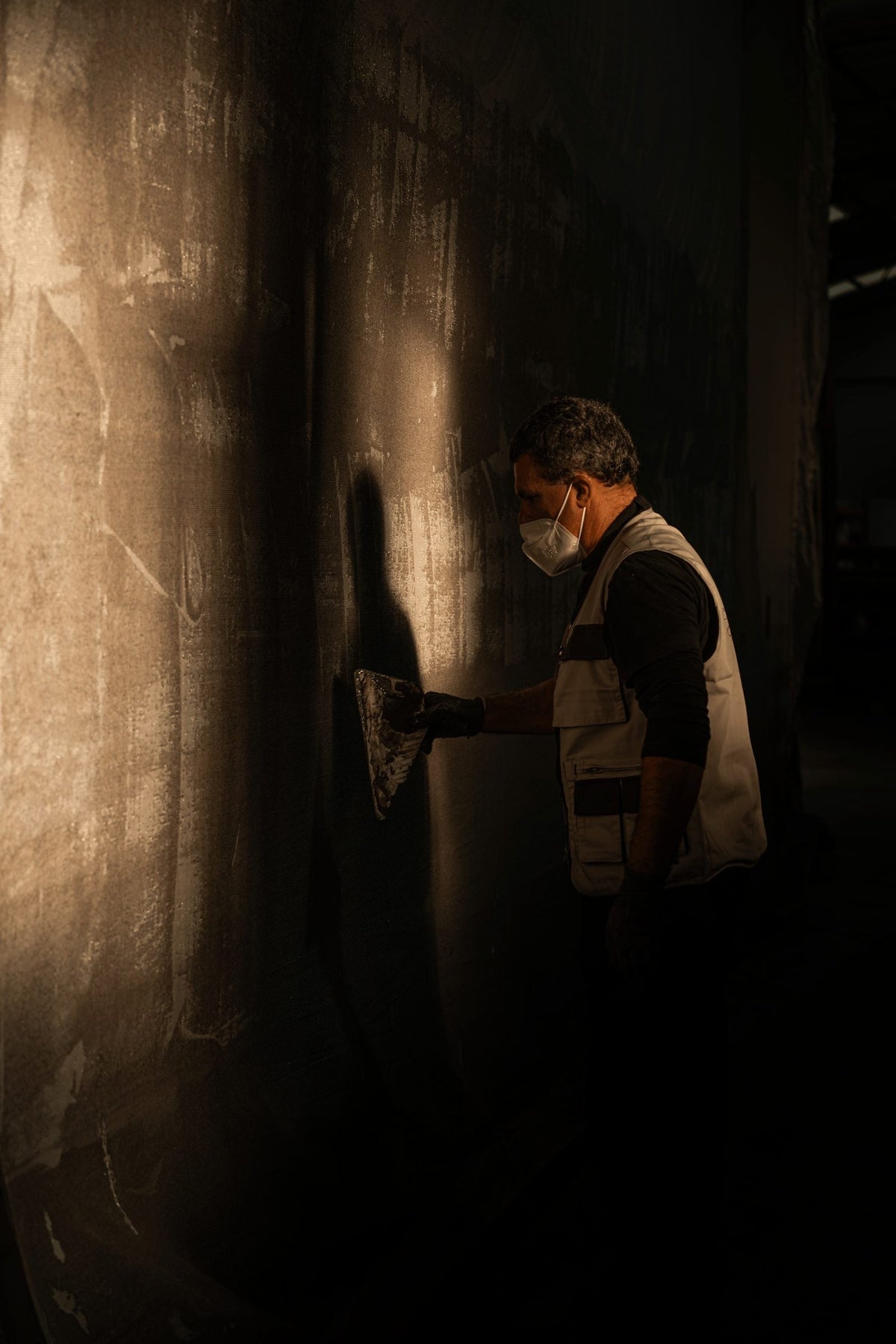
Portuguese rug craftsmanship is defined by hand-led work, careful material choice and close attention to finishing. It draws on a long national textile tradition, from the historic Arraiolos rugs of the Alentejo to the contemporary workshops that produce luxury rugs today. At CORVO Rugs, that craftsmanship goes into every bespoke piece, made to order by skilled artisans in Portugal.
What makes Portuguese craftsmanship different?
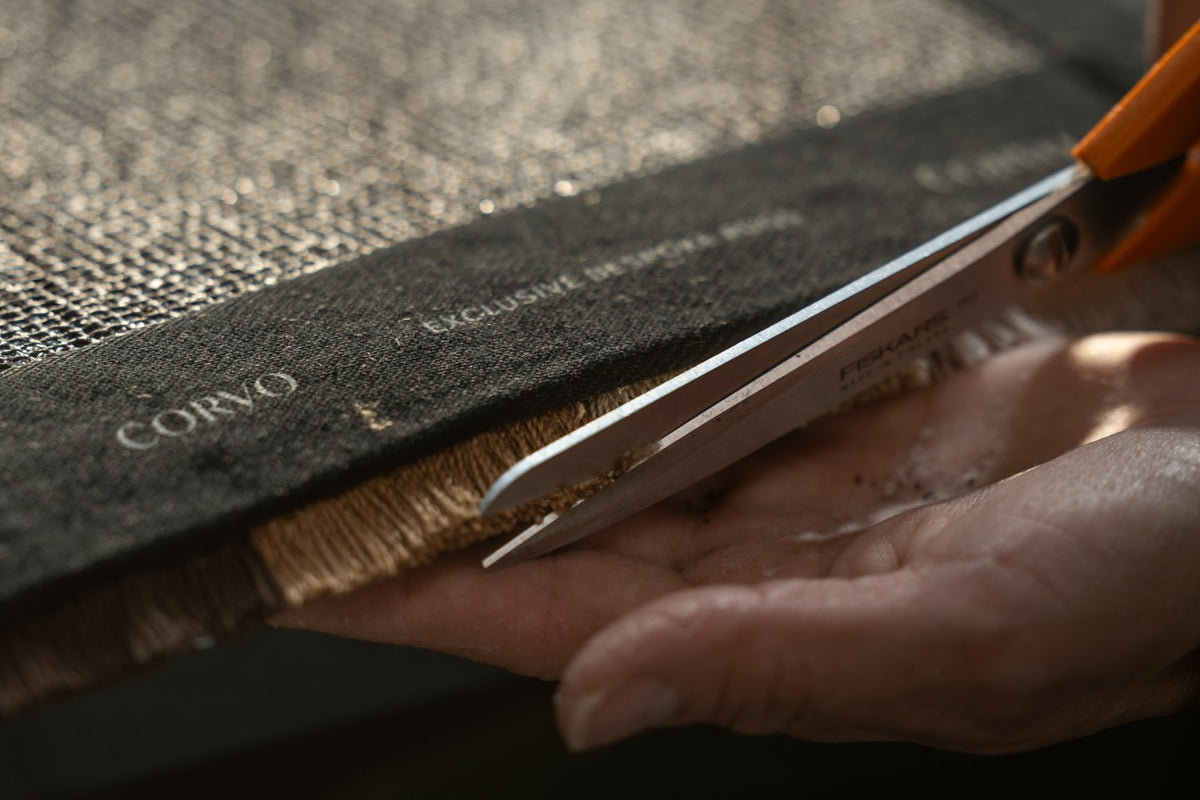
Portuguese craft culture values patience and precision over speed. Many skills are passed down through families and workshops, and artisans often specialise in a single stage of the process for years. The result is a way of working in which small details matter: how evenly a yarn is laid, how cleanly a colour change is drawn, how an edge is finished.
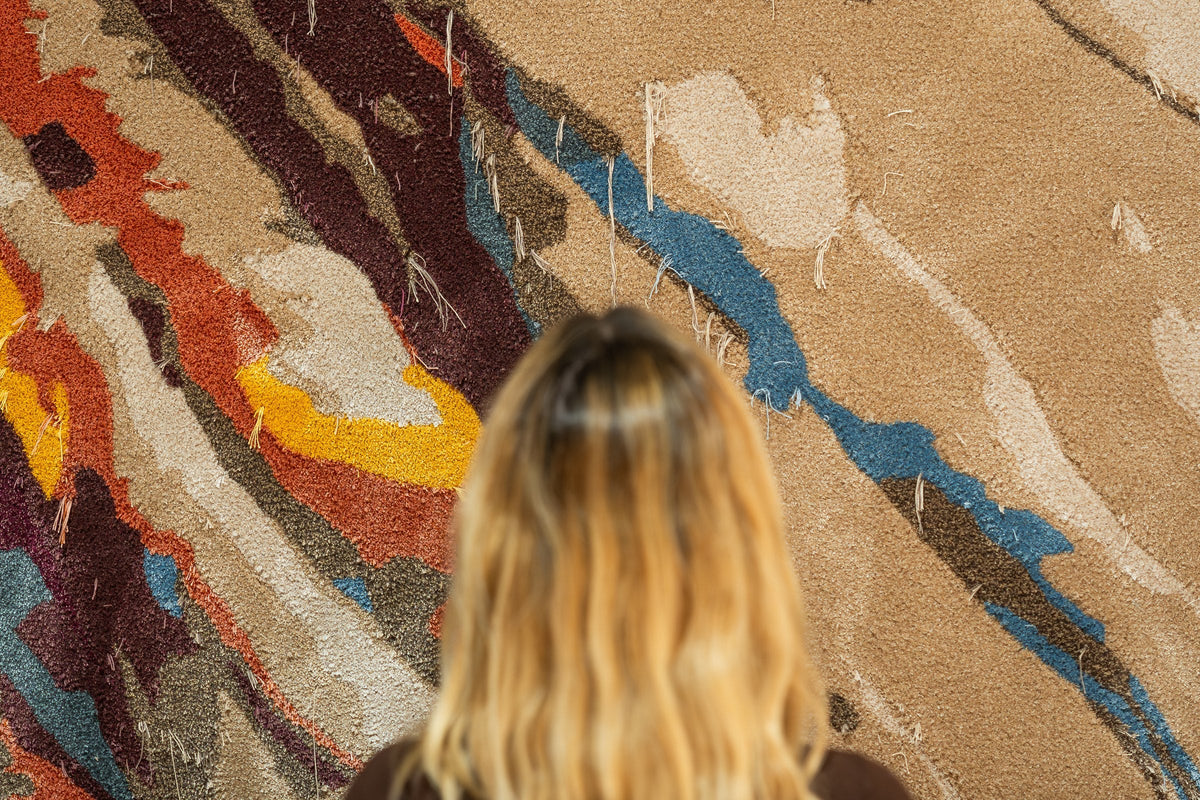
CORVO works with cut pile, loop pile and combinations of both, at different heights. This is what creates the relief in pieces such as Roots, where raised lines catch the light against a lower ground.
How do you recognise a well-crafted rug?
- Density: a dense pile feels full and springs back when pressed.
- Clean lines: the borders between colours are sharp, with no bleeding or gaps.
- An even surface: pile height is consistent across the rug, unless variation is part of the design.
- Finishing: edges are straight and secure, and the back is neat and well bonded.
- Material honesty: each fibre feels as it should, with wool resilient and silk or Lyocell smooth with a natural sheen.
From Ink to Thread: how a drawing becomes a rug
CORVO's newest collection, From Ink to Thread, shows the craft in action. It translates original watercolours and drawings by CORVO's master and founder, Ramiro Relvas, into rugs designed by Tânia Resende. In Earthbound I, tree-like lines drawn over earthy washes of colour become relief in the pile; in Sunset, a single line of ink crosses a round rug of soft, layered tones.
This translation is where craftsmanship matters most. A line that looks effortless on paper has to be rebuilt in yarn, with the right colour, height and texture, so that the rug feels drawn rather than printed.
How does CORVO combine tradition and innovation?
CORVO pairs traditional know-how with contemporary design and materials. Classic fibres such as natural wool sit alongside modern ones like Lyocell and internally developed silks, and every design is developed in the studio before it goes into production. Tradition sets the standard of quality; innovation widens what is possible.
Key facts
- Portuguese craftsmanship built on centuries of textile tradition
- CORVO: more than 50 years of rug production
- Every rug handcrafted by skilled artisans in Portugal
- From Ink to Thread: rugs based on the watercolours of founder Ramiro Relvas
Frequently asked questions
What is an Arraiolos rug?
A traditional Portuguese rug, hand-embroidered in wool on canvas, originating in the town of Arraiolos in the Alentejo.
Is a handcrafted rug better than a machine-made one?
Handcrafted rugs generally offer more density, detail, customisation and lifespan. Machine-made rugs cost less but cannot be adapted in the same way.
Where can I see CORVO rugs?
The Lookbook shows CORVO rugs styled in interiors, and for a project the team can prepare physical samples.
Want to see the craft up close? Start a bespoke project and the CORVO team will guide you from the first sketch to the finished rug.